
How to Hire Reliable Freelancers Without Getting Scammed
The global freelance market has entered a highly sophisticated, AI-accelerated era. While decentralized platforms and direct-to-talent networks offer companies unprecedented scale and speed, they have also given rise to advanced, tech-driven fraudulent practices.
In 2026, hiring managers are no longer just dealing with simple missed deadlines or exaggerated résumés. Today’s risk landscape includes identity theft, deepfaked video interviews, outsourced ghost-freelancing (where an elite developer interviews but a low-skilled sub-contractor executes), and AI-plagiarized assets that expose your business to severe intellectual property (IP) liabilities.
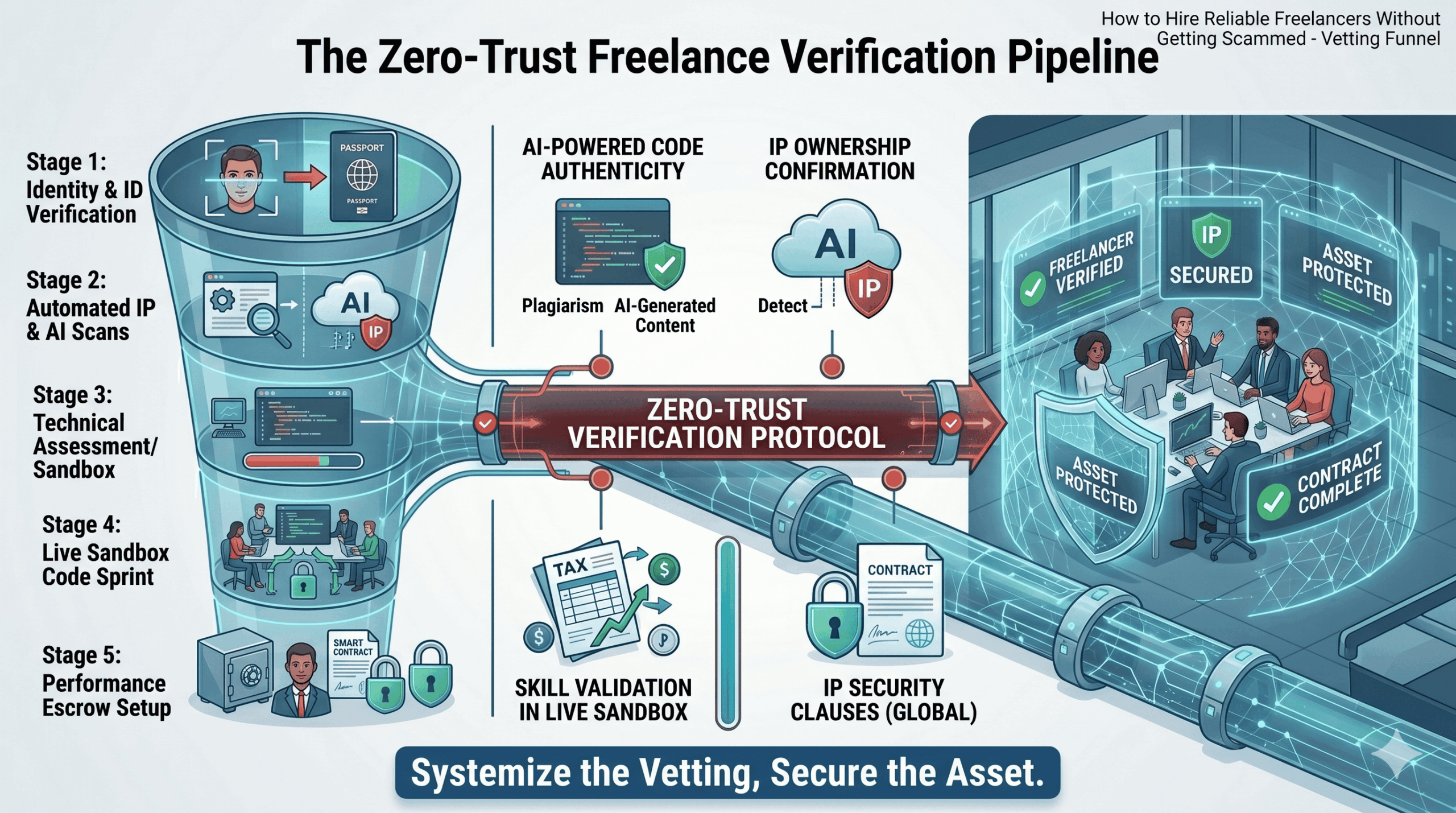
If your organization relies on independent talent to stay agile, you cannot rely on old-school “gut feelings” or basic platform rating systems. You need an airtight, systematic verification funnel. Here is the operational blueprint to sourcing, vetting, and hiring reliable freelancers without getting scammed.

1. Eliminate “The Ghost Mirror” with Live Technical Verifications
One of the fastest-growing scams in the remote economy is the Ghost Freelancer. A highly skilled, articulate professional interviews for your premium contract role, easily passing your initial screening. However, the moment the contract is signed, they quietly pass your credentials, source code, and tasks to an unverified, low-cost sub-contractor. Your data is exposed, and your project velocity plummets.
The Verification Framework:
- The Live Sandbox Sprint: Never hire an independent consultant based solely on a static portfolio or a conversation. Require a live, recorded technical challenge. For developers, use a collaborative coding platform to watch them refactor code in real time. For marketers or designers, give them a live, 30-minute contextual problem-solving scenario. Read more about the exact portfolio formula that gets freelancers hired to understand what legitimate talent presents.
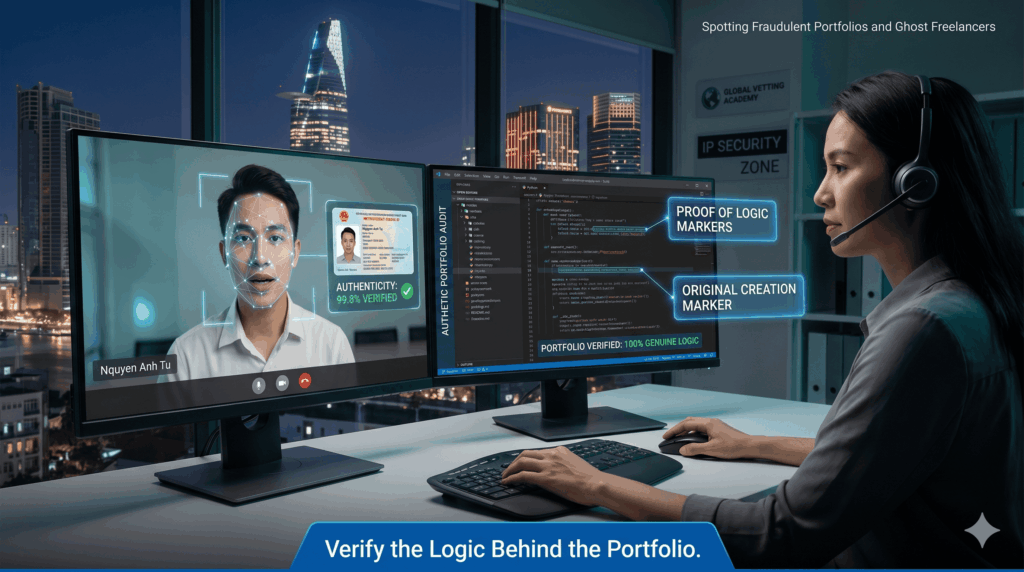
- The Identity Interlock: During the live technical assessment, match their live camera feed against an official government-issued ID. Ensure that the person writing the logic or designing the workflow is the exact individual linked to the contract.

2. Implement Tiered, Performance-Based Milestones
A classic freelance scam is the Upfront Ghost. A contractor demands a 50% or 100% upfront deposit for a project, claims an immediate personal or technical emergency the next day, and completely vanishes with your capital.
The Verification Framework:
Never expose your company’s cash flow to large, unearned upfront outlays. Structure every single engagement using a strict, performance-indexed escrow or milestone funnel.
[Contract Signed] ➔ [Milestone 1: 15% Escrow] ➔ [Artifact Delivered & Verified] ➔ [Funds Released] ➔ [Repeat]
- The 15% Anchor: Keep initial milestones small. For a $5,000 project, break the first deliverable into a tiny, low-risk $500 task (e.g., an architectural outline, wireframe, or research brief).
- Escrow Infrastructure: Utilize secure escrow features on reputable platforms or use multi-signature digital contracts. Funds should only leave your business when a specific, verifiable artifact is pushed to your repositories or project systems.
3. Run Automated IP and Code Integrity Screenings
With the explosion of conversational AI utilities, a new wave of fraudulent freelancing has emerged: The Prompt Arbitrageur. These are individuals who accept premium rates for custom content, copy, or software engineering, but simply generate raw, unchecked AI outputs in seconds and paste them into your deliverables.
Why It Fails:
Unchecked AI generations often contain hallucinated code dependencies, security vulnerabilities, or direct copyright infringements from open-source training data. If you deploy this work into your production environment, your business faces severe legal and security exposure.
The Verification Framework:
Treat all incoming freelance deliverables with zero-trust protocols. Run automated scanning checks before any milestone is marked as complete:
| Asset Type | Fraud Risk | Automated Verification Tool |
| Software Code | Plagiarized/Stolen logic, security vulnerabilities | SonarQube, Snyk, GitHub Advanced Security |
| Written Content | AI-generated fluff, copied text copyright risk | Copyleaks, Originality.ai, Turnitin |
| Visual Design | Stolen stock vectors, AI-generated artifacts | Google Reverse Image Search, Hive AI Detector |
4. Contract Legally via Global Compliance Systems
Hiring a freelancer directly via an informal chat app or a casual email thread leaves your company with zero legal leverage if things go wrong. If an international contractor steals your source code, breaches a non-disclosure agreement (NDA), or suddenly stops working, pursuing them through local foreign courts is financially impossible.
The Verification Framework:
Bypass informal agreements and institutionalize your independent talent pipeline using an Employer of Record (EOR) or Freelance Compliance Management platform (such as Deel, Remote, or Hubstaff Talent).
- The Automated Shield: These networks force the freelancer to upload verified tax documentation, complete KYC (Know Your Customer) identity checks, and sign internationally enforceable, jurisdiction-compliant NDAs and IP Assignment clauses.
- The IP Guarantee: The compliance platform acts as a legal barrier, ensuring that all work created by the freelancer is automatically and cleanly transferred to your corporate entity the microsecond payment is processed.
5. Audit “Proof of Logic” in Portfolios
It is incredibly easy for a fraudulent freelancer to download high-end website designs, clone open-source GitHub repositories, or screenshot a major brand’s public marketing campaign and claim it as their own work.
The Verification Framework:
When reviewing a candidate’s portfolio, ignore the final shiny asset. Demand to see the Proof of Logic behind it.
- The Deep-Dive Interview: Pick a specific piece of work from their portfolio and ask highly granular, unexpected questions: “Why did you choose this specific cloud database architecture over PostgreSQL for this client?” or “What was the exact conversion lift of this ad copy, and how did you manage the A/B testing variations?”
- A fraudster who stole a portfolio will immediately stumble, hesitate, and fail to explain the underlying strategic logic, while a legitimate expert will talk endlessly about the micro-details of their execution.
Conclusion: Build a Zero-Trust Sourcing Funnel
Hiring reliable freelancers in 2026 is not an art form; it is a disciplined security protocol. The businesses that scale successfully using independent talent are those that replace optimism with infrastructure.
By running live technical sandbox tests, enforcing small and performance-indexed milestones, running zero-trust automated integrity scans, and routing contracts through formal compliance platforms, you eliminate the threat of fraud. You protect your capital, secure your intellectual property, and construct a high-performance distributed workspace built entirely on vetted, predictable expertise.
Leave your comment