
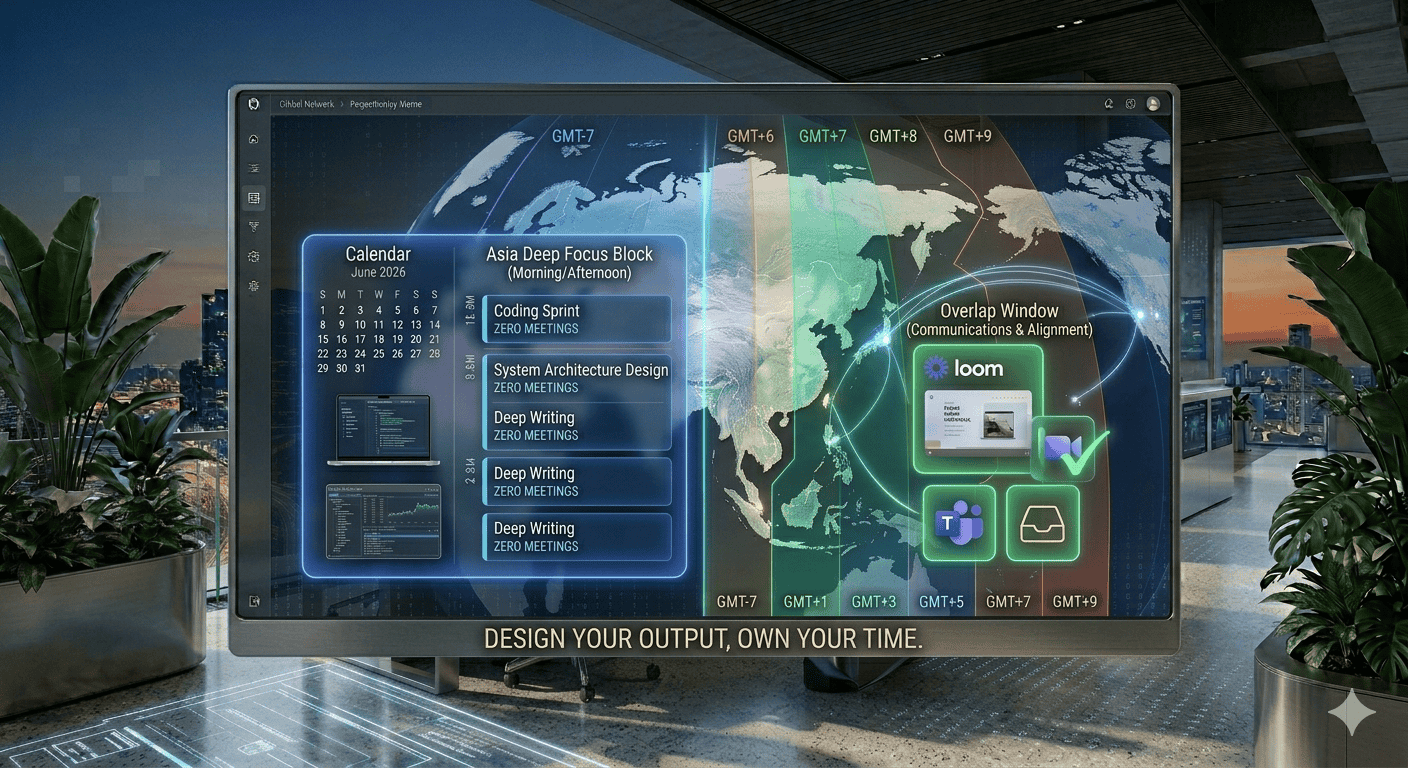
Read this article to learn more about this topic,How to Travel Asia While Working Full-Time Online
How to Travel Asia While Working Full-Time Online
The concept of the “digital nomad” has evolved from a counter-culture experiment into a highly disciplined professional lifestyle. In 2026, traveling across Asia while maintaining a full-time online commitment—whether as an enterprise remote employee, an elite freelancer, or an agency founder—is no longer about “getting away.” It is about seamless operational execution from anywhere on earth.
The modern Asian infrastructure landscape offers a massive competitive advantage: you can access hyper-modern urban hubs, pristine coastal regions, and deep cultural centers without ever missing a sprint deadline, dropping an asynchronous client update, or suffering from bandwidth latency.
However, doing this successfully while managing a true 40-hour workweek requires shifting your mindset from a traveler who works to a business entity that changes locations. Here is the structural blueprint to traveling Asia without missing a beat online.
1. The “Slow Travel” Rule: Moving at the Speed of Production
The fastest way to burn out, damage your client relationships, and exhaust your mental capacity is to move locations every three to four days. Fast travel destroys the cognitive energy required for high-stakes deep work.
The Strategy:
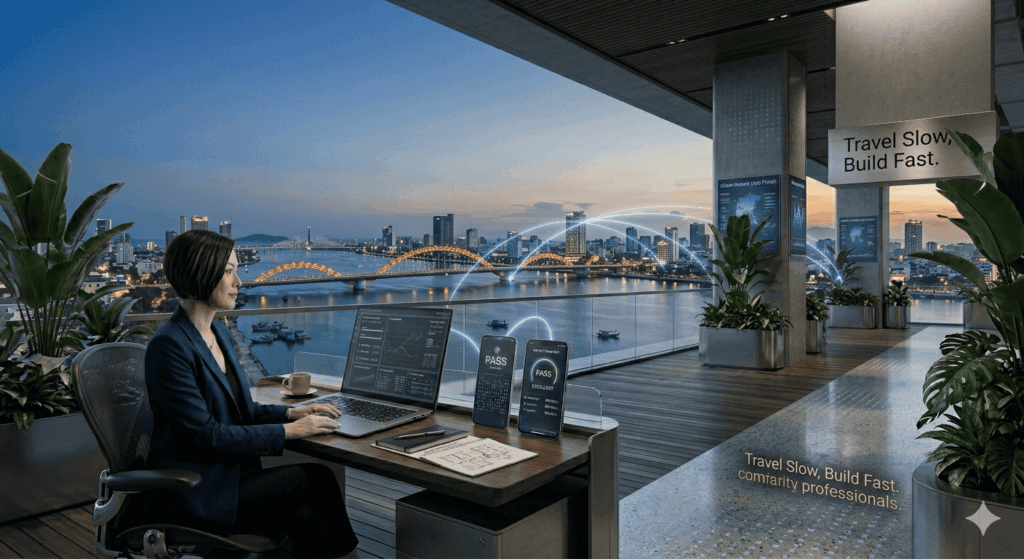
Adopt a minimum 30-to-90-day base residency cadence. Instead of trying to see five countries in two months, pick one strategic hub and anchor yourself there.
- The Routine Advantage: Spending 1–3 months in a city like Da Nang, Chiang Mai, or Kuala Lumpur allows you to establish a predictable daily routine. You learn where the best Wi-Fi cafés are, find a reliable local gym, map your grocery runs, and stabilize your sleep cycle.
- Financial Optimization: Long-term rentals (via specialized expat networks or local agents) are often 50% cheaper than short-term bookings. Furthermore, staying longer qualifies you for extended modern remote work frameworks, such as Thailand’s Destination Thailand Visa (DTV) or Malaysia’s DE Rantau Pass.
2. The Redundant Power & Connectivity Stack
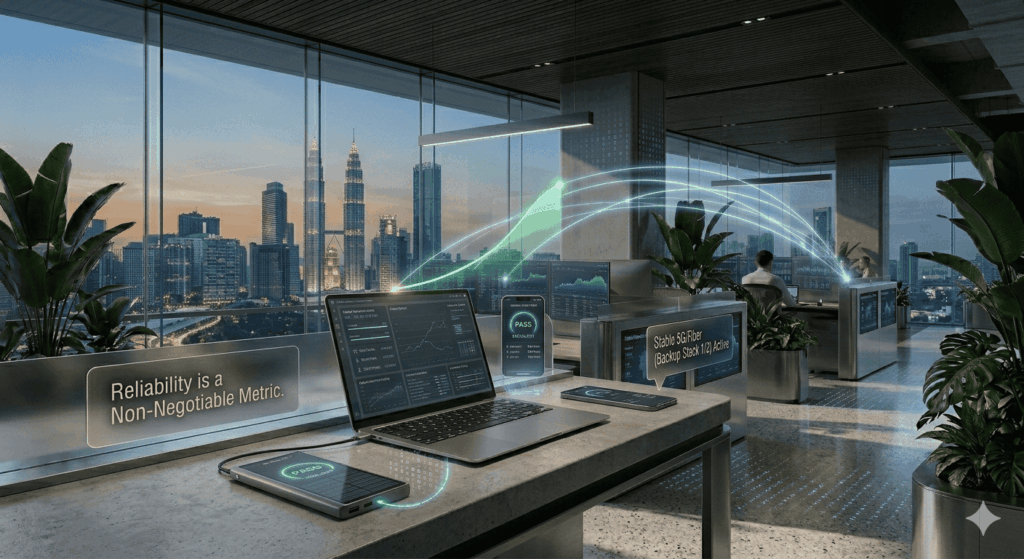
In the 2026 automated economy, an internet drop-off isn’t an inconvenience; it’s a professional crisis. You cannot rely solely on your accommodation’s Wi-Fi. You must build a Personal Infrastructure Fortress.
The Tech Blueprint:
Before opening your laptop in any new Asian destination, ensure your connectivity stack features total redundancy:
[Primary Link: Fiber/Co-Working Wi-Fi] ➔ [Backup 1: Local 5G Physical SIM] ➔ [Backup 2: Global eSIM Data Plan]
- The Local SIM Layer: Upon landing, bypass the basic tourist counters and secure a premium, contract-free local 5G physical SIM card (such as Viettel in Vietnam, AIS in Thailand, or Maxis in Malaysia). These offer unlimited, high-velocity data for less than $15–$20 a month.
- The Backup eSIM: Keep a global digital eSIM active on your device as an instant, cross-border network backup during travel transitions.
- The Hardware Factor: Always travel with a high-capacity power bank capable of charging your laptop. Power fluctuations can happen in smaller coastal towns or during tropical monsoons; a dead battery should never be the reason you miss an urgent deployment.
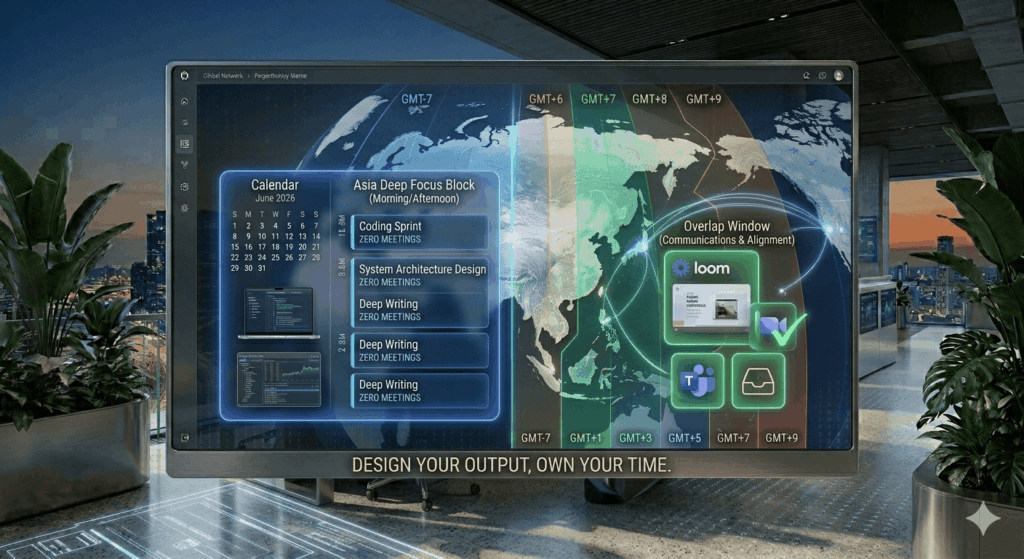
3. Time-Zone Harmonization: Mastering the Async Bridge
If your employers or high-ticket clients are based in Western Europe or North America, working from Asia puts you in a radical time-zone offset (typically GMT+7 to GMT+9). Managing this requires moving away from real-time presence toward Asynchronous Excellence.
The Operational Split:
Do not try to stay awake all night to match a 9-to-5 corporate schedule in New York. That lifestyle is biologically unsustainable. Instead, restructure your workday into two distinct blocks:
| Time Block (Local Asia Time) | Professional Focus | Operational Activity |
| Morning / Afternoon (Deep Focus) | High-Value Production | Coding, deep writing, system architecture, strategy. Zero distractions. |
| Evening (The Overlap Window) | Communication & Alignment | Sending Loom video updates, attending essential alignment syncs, inbox management. |
- The Loom Advantage: Instead of demanding a 30-minute face-to-face meeting at midnight your time, record a 3-minute video walkthrough of your progress during your afternoon. Send it over so the client opens it during their morning. This proves progress, displays consultative presence, and protects your sleep.
4. Selecting “Productive Hubs” over “Vacation Zones”
Not all beautiful locations in Asia are built for full-time online performance. If a location’s primary industry is nightlife and holiday tourism, your productivity will suffer from social distraction and spotty local infrastructure.
Where to Base Your Business:
Prioritize destinations that offer Value Density—modern amenities mixed with lifestyle arbitrage.
- The Urban Infrastructure Kings: Kuala Lumpur (Malaysia) and Bangkok (Thailand). These cities offer Western-grade high-rise condominiums with dedicated, quiet in-house co-working lounges, flawless 500 Mbps fiber networks, and convenient public transport systems.
- The Lifestyle/Focus Centers: Da Nang (Vietnam) and Chiang Mai (Thailand). These destinations cater specifically to independent tech professionals, offering a dense web of specialized workspaces, healthy food infrastructure, and a quiet, output-oriented community of peers.
5. The Administrative and Financial Shield
To travel seamlessly across Asia while earning a full-time income, your back-end business setup must be automated, compliant, and borderless.
The Requirements:
- Multi-Currency Banking: Utilize global borderless banking solutions to receive payments in USD, EUR, or GBP, and deploy local wallets or physical multi-currency debit cards to handle daily expenses across different Asian nations without predatory conversion fees.
- The Tax & Legal Guardrail: Ensure your remote work contracts explicitly state that you are authorized to operate geographically independent of a corporate office. Keep immaculate records of your physical location transitions to maintain strict tax-compliance thresholds.
Conclusion: The Professional Arbitrage
Traveling Asia while working a full-time online job is the ultimate lifestyle shortcut, provided you prioritize Systems over Sightseeing. By embracing slow travel, building a bulletproof connectivity stack, and mastering asynchronous updates, you eliminate the friction of travel. You turn your physical location into an unfair advantage—maximizing your savings, expanding your creative boundaries, and executing global business at the highest level of performance.
Leave your comment