

See more details in this article about,How Top Freelancers Build Personal Brands That Attract Clients
How Top Freelancers Build Personal Brands That Attract Clients
In 2026, the global freelance economy has reached a state of “Peak Noise.” With AI-driven tools lowering the barrier to entry for technical and creative services, the marketplace is flooded with practitioners who look identical on paper. In this hyper-competitive landscape, your technical skill is no longer your primary asset—it is merely your “ticket to entry.” The real differentiator, the force that allows elite freelancers to bypass bidding wars and command premium rates, is Personal Branding.
A personal brand is not a logo, a color palette, or a catchy slogan. In the context of the 2026 “Trust Economy,” a personal brand is a shorthand for trust and predictable ROI. It is the collective impression of your authority, your “human-in-the-loop” logic, and your proven track record.
Top freelancers in 2026 don’t apply for jobs; they attract them. Here is the architectural blueprint for building a personal brand that turns you into a magnet for high-ticket clients.
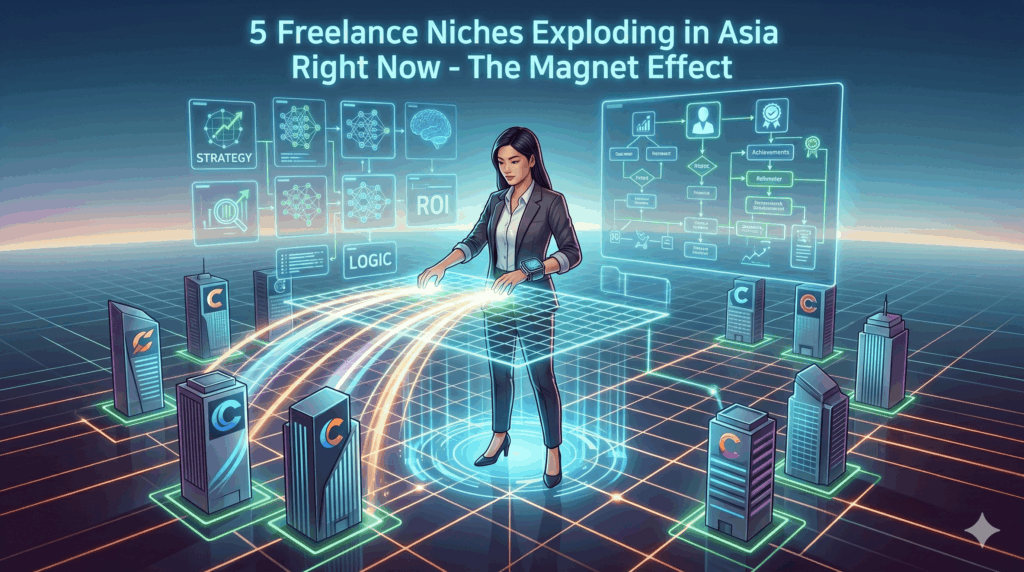
Part I: The “Authority Pivot”—Moving from Generalist to Category King
The biggest mistake mid-level freelancers make is trying to be “everything to everyone.” In 2026, the “Generalist” is a commodity that AI can replace for $20 a month. Top freelancers build their brands on Radical Specialization.
1. Defining Your “Niche of One”
A powerful brand is built on a specific intersection of skills. Instead of being a “Graphic Designer,” an elite freelancer is a “Brand Architect for Sustainable Fintech Startups.”
- The Advantage: When you narrow your focus, you don’t lose clients; you increase your “Magnetism” for the specific clients who need that exact solution.
- The Brand Promise: Your brand should answer one question instantly: “What is the specific, high-stakes problem that only you can solve?”
2. The “Category King” Strategy
In the 2026 economy, people don’t hire the “best” person; they hire the person who owns the category in their mind. Top freelancers use their brand to define a new category of service, making competition irrelevant.

Part II: The Content Ecosystem—Building a “Digital Twin”
Top freelancers realize that they cannot be everywhere at once. Their personal brand acts as their “Digital Twin”—a version of themselves that is networking, educating, and selling 24/7 while they are focused on deep work.
1. The “Proof of Logic” Content Strategy
In 2026, clients are skeptical of “Proof of Work” because AI can fake it. They are looking for Proof of Logic. Your content should not just show the final result; it should pull back the curtain on how you think.
- Case Study Breakdowns: Instead of a gallery of images, write a post titled: “Why I rejected the client’s original brief to save them $50k in future technical debt.
- The “Human-AI Hybrid” Narrative: Explicitly discuss how you use AI to accelerate your workflow, but emphasize the human strategic decisions that the AI couldn’t make.
2. Platform Selection: Depth over Breadth
You don’t need 100k followers on five platforms. You need a “Minimum Viable Audience” on one or two platforms where your target founders and CEOs congregate.
- LinkedIn: The “Digital Boardroom” for B2B and strategic consulting.
- Substack: The “Deep-Dive” for building high-intent loyalty through long-form thought leadership.
- Twitter/X: The “Networking Layer” for real-time engagement with the tech and startup community.

Part III: The “Trust Stack”—Verification in the Age of AI
A personal brand is only as strong as its verification. In 2026, top freelancers utilize a “Trust Stack” to bypass the skepticism of new clients.
1. Video as the Ultimate Authenticator
Text can be generated; voices can be cloned. But a consistent, long-form video presence—where you explain complex concepts, react to industry shifts, and share your personality—is incredibly hard to fake.
- Loom as a Brand Tool: Top freelancers use video walkthroughs not just for clients, but as a public branding tool to show their “Consultative Presence.
2. Social Proof 2.0: The “Verified Outcome”
Generic testimonials like “They did a great job!” are worthless in 2026. Top brands feature Metric-Backed Endorsements.
“Working with [Name] didn’t just give us a new website; it shortened our sales cycle from 14 days to 4 days.”
Part IV: The “Invisible” Brand—Consistency and Professionalism
The most powerful part of a freelancer’s brand is what happens after the contract is signed. Your “Operational Brand” is what generates referrals—the holy grail of freelancing.
1. The Onboarding Experience
Your brand is reflected in your systems. If your onboarding is a messy thread of emails, your brand is “Amateur.” If your onboarding is a seamless, AI-automated Notion portal with clear milestones, your brand is “Elite Professional.”
2. Asynchronous Excellence
In 2026, being “available 24/7” is not a flex; it’s a sign of a lack of boundaries. Top freelancers build a brand around Asynchronous Excellence. They set expectations, use video updates to reduce meetings, and provide radical transparency. Their brand becomes: “The person who makes my life easier without needing a 30-minute sync call.”
Part V: Conclusion—The Brand is the Business
The “Shocking Truth” of 2026 is that your brand is your moat. AI can copy your code, it can mimic your writing style, and it can approximate your design aesthetic. But it cannot replicate your reputation, your relationships, or your “Human-in-the-Loop” authority.
Building a personal brand is a long-term investment in market insulation. When you have a brand that attracts clients, you stop being a “service provider” and start being a “strategic asset.” In the 2026 economy, the freelancers who thrive aren’t the ones who work the hardest; they are the ones who have built a brand that speaks for them before they even enter the room.
Leave your comment