
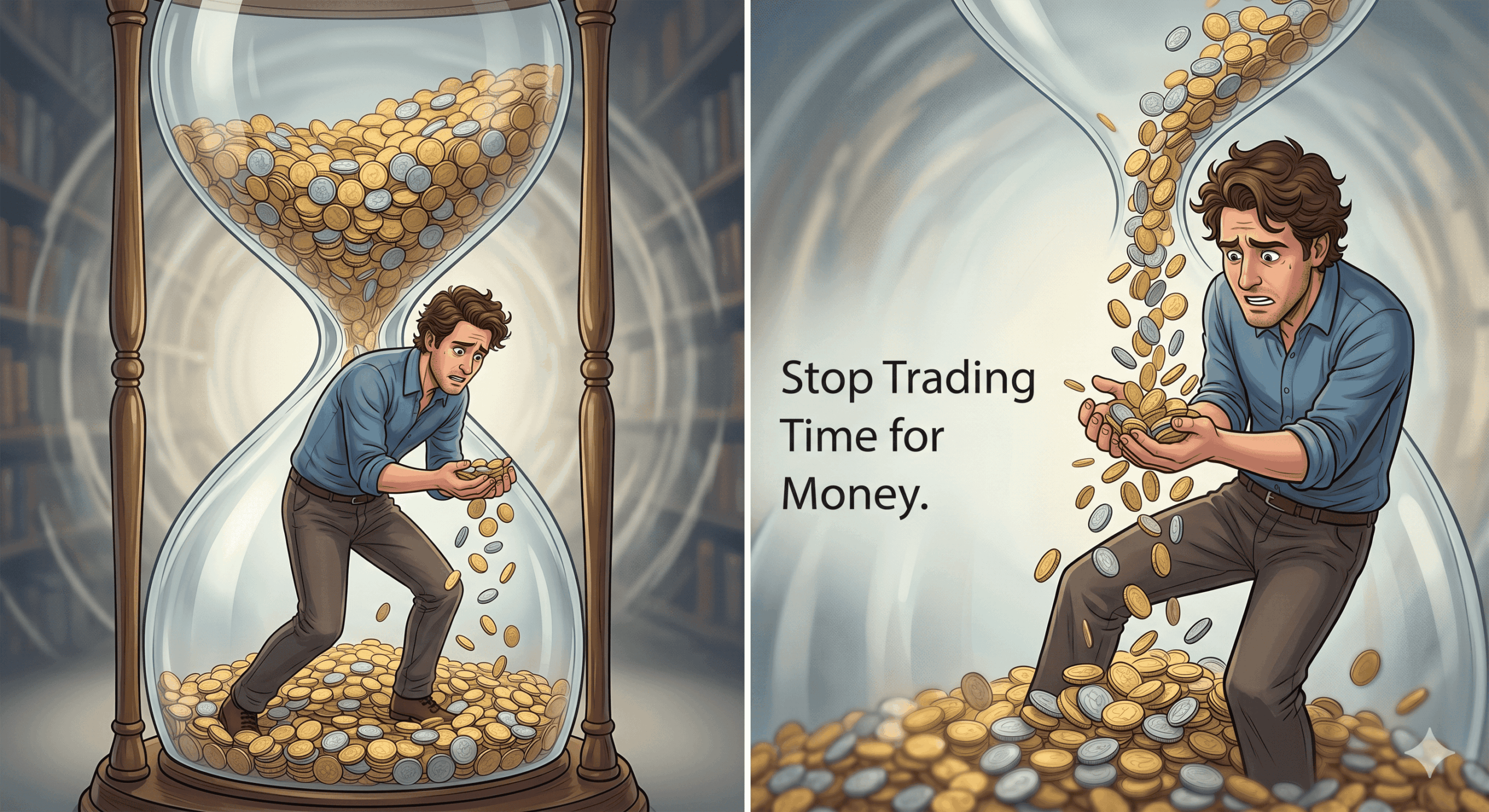
Read this article to learn more about this topic,Why Most Freelancers Stay Broke — And How to Avoid It
Why Most Freelancers Stay Broke — And How to Avoid It
In 2026, the “gig economy” has undergone a radical transformation. Artificial Intelligence has effectively hollowed out the bottom of the market—eliminating repetitive, low-complexity tasks—leaving behind a highly polarized landscape. On one side, we have the “digital elite” earning impressive sums on strategic projects; on the other, a vast mass of freelancers struggling for scraps on bidding platforms, working harder than ever for diminishing returns.
The brutal reality is that most freelancers aren’t truly entrepreneurs; they are employees with “multiple bosses,” lacking the security of a salary and the comfort of benefits. If you feel stuck in a “feast or famine” cycle, you must understand that the problem isn’t the market—it’s your business model.
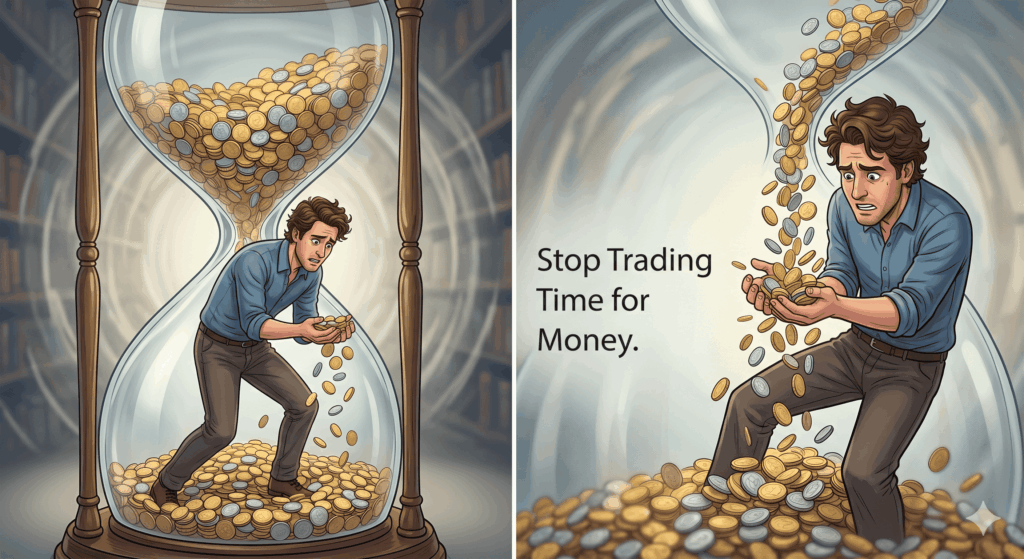
1. The “Time for Money” Trap: The Biological Ceiling
The single biggest mistake keeping freelancers broke is selling units of time. A day has only 24 hours, and your cognitive capacity is finite. If your income model depends exclusively on your active presence at a keyboard, you have already capped your business’s potential.
Why this model is failing in 2026:
- Competency Inflation: As you get better, you finish work faster. If you are paid by the hour, you are effectively being financially penalized for your efficiency.
- AI Commoditization: If a task that used to take you 5 hours can now be done by AI in 5 minutes, the client will no longer accept your old hourly rate.
How to avoid it: Transition to Value-Based Pricing. Clients aren’t paying for your hours; they are paying for the result you deliver. A sales page that generates $100,000 in profit is worth the same regardless of whether it took you 2 hours or 20 to write.
2. Lack of Specialization: The “Jack of All Trades” is Paid the Least
If your profile says “Designer, Copywriter, and Social Media Expert,” you are telling the market you are an expert in nothing. In 2026, premium clients aren’t looking for generalists; they are looking for “surgeons” who can fix a specific, painful, and expensive problem.
The Paradox of Choice:
When you are a generalist, you are compared to millions of other freelancers globally. The only differentiator becomes the lowest price. This is a “race to the bottom” that you do not want to win.
How to avoid it: Identify a Micro-Niche. Don’t just be an “SEO Expert.” Be the “SEO Specialist for rapidly scaling Telemedicine platforms.” Specialization allows you to charge 5-10x higher rates because you eliminate competition and reduce the client’s perceived risk.

3. Ignoring Marketing: Are You the Best Kept Secret?
Most freelancers stay broke because their sales strategy is reactive: they wait for a project to appear on a job board or hope for a referral. A sustainable business requires a predictable pipeline of clients.
The “Passive Portfolio” Error:
A beautiful portfolio isn’t enough if no one sees it. In 2026, top freelancers build a Personal Brand that works for them 24/7.
How to avoid it: Allocate at least 20% of your weekly time to “Demand Generation.” Write case studies, publish insights about your industry, and become an authority in your chosen niche. The goal is to move from “hunting” (outbound) to “attraction” (inbound).
4. Absence of Systems and Delegation: You’re Stuck in “Admin”
Freelancers run out of money because they spend their precious time on $10/hour tasks (invoicing, answering emails, scheduling) instead of focusing on $200/hour activities (strategy, high-level creative execution, sales).
How to avoid it:
- Automate: Use AI tools and workflows (n8n, Zapier) to handle onboarding and invoicing.
- Outsource: Hire a Virtual Assistant (VA) or a junior freelancer for repetitive tasks.
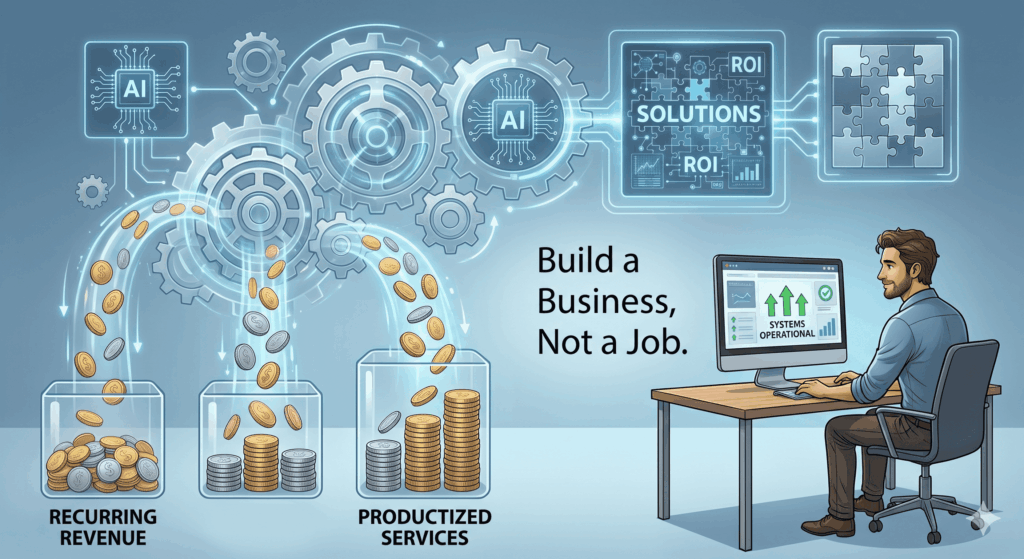
- Productize: Turn your services into fixed packages (Productized Services). This allows you to scale without adding complexity.
5. The Psychology of Low Rates and the Fear of Rejection
Freelancer poverty is often a mindset problem. The fear that “if I charge too much, the client will leave” is what keeps you tethered to toxic, low-paying projects.
How to avoid it: Understand that Price is a signal of quality. Premium clients avoid cheap freelancers because a low price signals a high risk of failure. Raise your rates until you start getting rejections—only then will you know you are approaching your true market value.
Conclusion: The 2026 Escape Plan
To avoid staying broke in freelancing, you must stop selling your self and start selling systems and results.
- Pick a painful niche.
- Productize your offer.
- Automate your workflow.
- Build public authority.
Moving from a freelancer to an online business owner is the only path to financial freedom in the new digital economy.
Leave your comment